


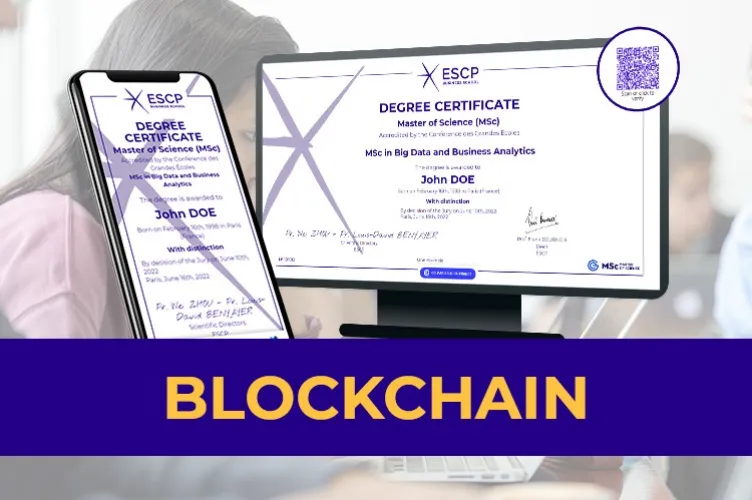
Blockchain Diplomas are changing the way educational credentials are issued, verified, and shared worldwide. Imagine graduating from a university and instantly being able to prove your degree to any employer across the globe, without waiting weeks for transcripts or worrying about fraudulent documents. That is the transformative potential of Blockchain Diplomas, making credential verification faster, secure, and more transparent.
Traditional diplomas are susceptible to forgery, delays, and bureaucratic hurdles. With blockchain technology, universities can issue tamper-proof digital diplomas stored on decentralized ledgers. Students gain control over their credentials, while employers and institutions can verify authenticity instantly.
The Rise of Blockchain Diplomas in Education
The idea of Blockchain Diplomas emerged from the growing need for secure and verifiable credentials in a globalized world. In the past, verifying a diploma from a foreign university could take weeks or even months. Academic fraud was also a persistent challenge for employers and institutions.
Blockchain offers a solution by creating a decentralized, immutable record of educational achievements. Once a diploma is recorded on a blockchain, it cannot be altered or forged. This system ensures that everyone—students, employers, and educational institutions—has access to trusted information.
Several universities around the world, from MIT to the University of Nicosia, have already started issuing blockchain-based diplomas. These initiatives highlight the increasing trust in the technology and its potential to reshape education globally.
How Blockchain Diplomas Work
Understanding how Blockchain Diplomas function is essential for grasping their impact. At the core, blockchain is a decentralized ledger that records data in secure, encrypted blocks. When a university issues a diploma on a blockchain, it generates a unique digital certificate linked to the student’s identity.
Employers or institutions can then verify the certificate by checking the blockchain record. This verification process is nearly instant and cannot be tampered with, unlike traditional paper-based diplomas.
Moreover, students can share their credentials using a secure digital wallet, eliminating the need to send physical copies or rely on intermediaries. This not only saves time but also reduces costs associated with diploma verification.
Benefits of Blockchain Diplomas
The advantages of Blockchain Diplomas extend far beyond convenience. Security is a primary benefit. Unlike paper diplomas that can be forged or altered, blockchain certificates are immutable. Each entry is time-stamped and encrypted, making it nearly impossible for bad actors to tamper with credentials.
Global recognition is another major advantage. With blockchain, diplomas issued in one country can be instantly verified anywhere else in the world. This is particularly valuable for students seeking international jobs or higher education opportunities.
Transparency is also enhanced. Institutions maintain an auditable record of all issued credentials, reducing disputes and errors. This not only builds trust but also streamlines administrative processes.
Real-Life Example of Blockchain Diplomas in Action
A compelling real-world example of Blockchain Diplomas involves a university in Spain that partnered with a blockchain platform to issue digital certificates. One student, seeking employment abroad, needed to verify his degree for an international company.
Previously, this process would have required sending transcripts, waiting for confirmation, and dealing with postal delays. With blockchain, the student shared a digital certificate, and the employer verified it in minutes. This seamless process demonstrated the efficiency and reliability of blockchain-based credentialing.
This example shows how Blockchain Diplomas are not just a technological novelty—they are a practical solution for modern education and employment challenges.
Challenges in Implementing Blockchain Diplomas
While the potential of Blockchain Diplomas is enormous, several challenges remain. Integration with existing university systems can be complex and costly. Institutions need to invest in infrastructure and training to ensure smooth adoption.
Regulatory considerations also play a role. Different countries have varying standards for digital credentials and data privacy laws. Compliance with these regulations is crucial to avoid legal issues.
Additionally, students and employers need to become familiar with blockchain technology to fully leverage its benefits. Without adequate awareness, adoption rates may remain slow despite the clear advantages.
The Role of Blockchain in Reducing Academic Fraud
One of the most compelling reasons for adopting Blockchain Diplomas is their ability to combat academic fraud. Fake diplomas and degree mills are persistent problems worldwide, costing employers billions annually.
Blockchain creates a tamper-proof record of each credential, making it nearly impossible for counterfeit diplomas to circulate. This protects both students and employers, fostering trust in educational qualifications.
Employers benefit from quick verification, reducing hiring risks. Students benefit from having credentials that are universally recognized and resistant to forgery. The result is a more secure and credible educational ecosystem.
Technological Innovations Supporting Blockchain Diplomas
Several innovations are enhancing the effectiveness of Blockchain Diplomas. Smart contracts, for instance, allow automated verification processes. When an employer requests verification, the smart contract executes instantly, confirming the authenticity of the credential.
Decentralized identity solutions are also gaining traction. These systems give students control over their personal data while allowing institutions to issue credentials securely. Students can selectively share their qualifications, enhancing privacy and reducing the risk of identity theft.
Artificial intelligence is being integrated to analyze credential data, detect anomalies, and provide insights on skill trends. Combined, these technologies make blockchain-based credentialing a robust and future-proof solution.
The Global Potential of Blockchain Diplomas
The impact of Blockchain Diplomas is not limited to individual institutions—it has global implications. In developing countries, where verification processes are slow and paper-based systems are prone to errors, blockchain offers a leap in efficiency and credibility.
International employers also benefit by being able to verify foreign qualifications instantly. This creates more opportunities for global talent mobility, helping students access jobs and universities beyond their home country.
Governments are exploring blockchain-based diplomas as part of national education systems, recognizing the benefits of secure, standardized digital credentials. The widespread adoption of blockchain could ultimately reshape the global education landscape.
Future Trends in Blockchain Diplomas
The future of Blockchain Diplomas is exciting and full of potential. As more institutions adopt this technology, we can expect greater interoperability between universities worldwide. Students could compile credentials from multiple institutions into a single, verifiable digital portfolio.
Integration with professional certification programs is also likely. Blockchain can track lifelong learning, ensuring that skills and certifications remain up-to-date and verifiable throughout a person’s career.
Sustainability is another emerging trend. Digital diplomas reduce the need for paper, printing, and shipping, contributing to environmentally friendly education practices.
Finally, as blockchain awareness grows, more employers and institutions will trust and demand digital credentials, making Blockchain Diplomas a standard in global education.
Read also :-