
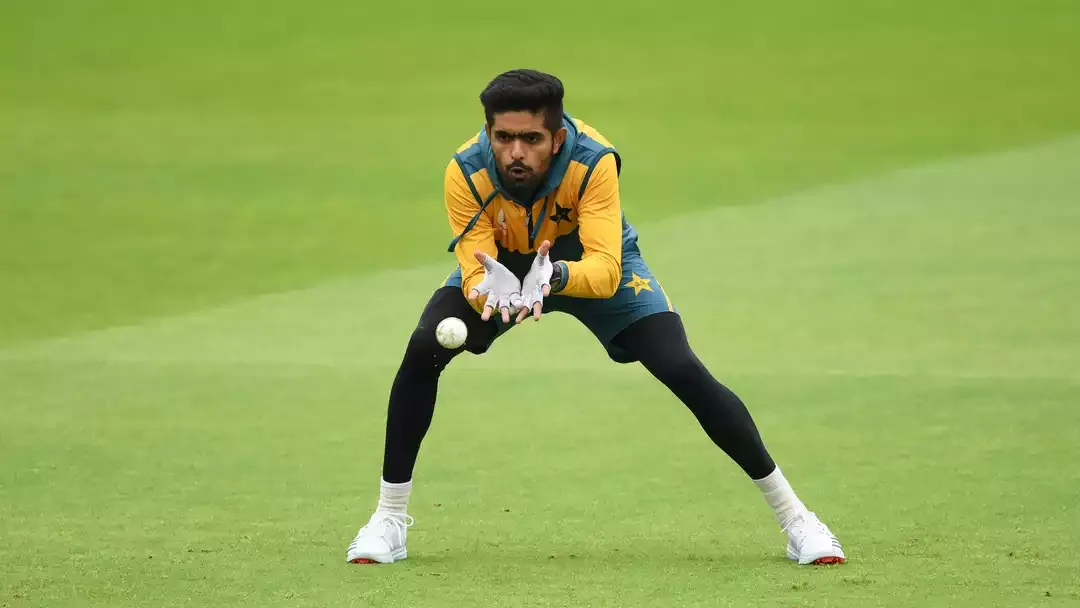
T20 Fielding Standardsare no longer just an afterthought in a team’s strategy meeting; they are now the very foundation upon which championships are built in the modern era. When the shortest format of the game first burst onto the scene, the focus was almost entirely on the massive sixes and the clever variations of the bowlers. However, as the margins between victory and defeat began to shrink to a few runs or a single delivery, the importance of the “third department” grew exponentially. Today, we witness athletes who are more akin to Olympic sprinters and gymnasts than the traditional cricketers of thirty years ago.
The evolution of these standards has been a sight to behold for any long-term follower of the sport. I remember watching matches in the early nineties where a few “specialist” fielders were placed in the hotspots, while the slower members of the team were hidden away at fine leg or third man. In the high-octane world of franchise leagues like the IPL or the Big Bash, there is no place to hide anymore. Every player on the pitch is expected to be a high-velocity unit capable of diving, sliding, and throwing with laser-like precision from any corner of the ground.
If you have ever stood on a cricket field during a T20 match, you know the atmosphere is completely different from the longer formats. The intensity is palpable from the very first ball. The fielders are constantly on their toes, chirping, moving with the batter, and anticipating the path of the ball before it even leaves the bat. This proactive mindset is the hallmark of the current generation. It is a game of millimeters where a diving stop at point or a sliding save on the boundary can create a psychological ripple effect that rattles the opposition batting lineup.
The shift toward these elite levels of athleticism didn’t happen by accident. It was born out of a mathematical necessity. In a game where 200 runs is often a par score, saving fifteen to twenty runs in the field is equivalent to having an extra world-class batter in your top order. Coaches and data analysts now quantify every movement, tracking the “runs saved” metric with the same scrutiny as a batting average or a bowling economy rate. This data-driven approach has made fielding a specialized craft that requires its own dedicated training protocols.
The Biomechanics and Physicality of Elite Fielding
When we analyze the modern T20 Fielding Standards, we have to talk about the sheer physical toll the game takes on the human body. A fielder in a high-intensity match might cover several kilometers in short, explosive sprints. The transition from a static standing position to a full-speed dash happens in a fraction of a second. This requires incredible fast-twitch muscle fiber activation and core stability. Players spend hours in the gym not just lifting weights for power, but performing plyometric drills that enhance their lateral movement and reaction times.
The art of the “sliding stop” is a perfect example of this technical evolution. In the past, fielders would often bend down to pick up the ball while running, which was slow and risky for the knees. Today, the controlled slide is a choreographed move. By sliding on their outer thigh and using their hands to gather the ball in one fluid motion, players can stop the ball and return to a throwing position significantly faster than before. This technique has saved thousands of boundaries and kept the pressure on batters who thought they had found the gap.
Boundary catching has also reached a level of aerial acrobatics that was once reserved for circus performers. We frequently see the “relay catch,” where a fielder realizes they are about to step over the boundary rope and tosses the ball back to a teammate. This requires immense presence of mind and spatial awareness. The ability to track a ball swirling in the night sky, jump at the perfect moment, and maintain body control while inches away from the foam cushions is a testament to the specialized training modern players undergo.
Fielding coaches have now become as influential as head coaches in many franchise setups. They use high-speed cameras to analyze the “power position” of a fielder’s throw, ensuring that the kinetic chain from the feet through the hips to the arm is optimized for maximum velocity. A throw from the deep that arrives at the keeper’s gloves over the stumps without a bounce is a weapon of intimidation. It tells the batters that taking a risky second run is a gamble they are likely to lose, effectively shutting down their scoring options.
Redefining Performance: The New T20 Fielding Standards
The role of the wicketkeeper has perhaps undergone the most significant transformation under the current T20 Fielding Standards. The modern keeper is no longer just a pair of hands behind the stumps; they are the general of the fielding unit. Because they have the best view of the pitch and the batter’s movements, they are responsible for fine-tuning the field placements for every delivery. Their agility has to be off the charts, often requiring them to dive full-length to grab a thin edge or sprint to the stumps to collect a wayward throw.
We also see a much higher premium placed on “standing up” to the medium-pacers. By standing closer to the stumps, the keeper prevents the batter from stepping out of the crease to neutralize the swing or seam. This puts an incredible amount of pressure on the keeper’s reflexes, as they have almost zero reaction time if the ball takes a deflection. This aggressive positioning has led to a rise in spectacular stumpings and has forced batters to reconsider their footwork against bowlers who aren’t even spinning the ball.
The “inner circle” pressure is another area where the game has changed. The four or five fielders stationed inside the thirty-yard circle during the powerplay are the elite “interceptors.” Their job is to prevent the singles that keep the scoreboard ticking. They stand closer than ever before, often putting their bodies on the line to stop a scorching drive. This proximity requires nerves of steel and a level of hand-eye coordination that is truly elite. A direct hit from these positions often results in a run-out that changes the entire momentum of the innings.
Direct hits have become the ultimate game-changer in the shortest format. In the past, a fielder would often be happy just to get the ball back to the keeper. Now, the expectation is to hit the stumps. Players practice “blind” throws and underarm flicks for hours in the nets. The sight of the middle stump being uprooted by a throw from a backward point fielder is enough to lift the energy of the entire bowling side. It creates a sense of “panic” in the batting side, leading to further mistakes and a collapse in the middle order.
How T20 Fielding Standards Affect Match Outcomes
The psychological impact of high-quality fielding is often more significant than the physical act itself. When a team is “buzzing” in the field, moving with energy and pulling off impossible stops, it creates an aura of invincibility. The batters start to feel that there are no gaps in the field. They begin to over-hit the ball or take unnecessary risks because they feel the pressure of the dot balls piling up. This is the invisible scoreboard that T20 Fielding Standards influence every single night.
I remember a specific match where a team was defending a very modest total. On paper, they should have lost easily. However, they produced a fielding display that was nothing short of miraculous. Every ball that looked like a certain four was cut off. Every half-chance was taken. They affected three run-outs in the space of five overs. By the end of the game, the opposition was so demoralized that they couldn’t even rotate the strike. It was a clear demonstration that you can bowl and bat well, but if you don’t field well, you are leaving your fate to chance.
The concept of “fielding partnerships” is also gaining traction among tactical analysts. Just as batters build partnerships, fielders at adjacent positions must work together. For instance, the fielder at long-on and long-off must communicate constantly to cover the “V” during the death overs. If one player is moving to intercept a ball, the other must be ready to back up the throw. This collective intelligence ensures that there are no “leakage points” in the defensive structure, making it incredibly difficult for the batting side to find a rhythm.
The financial impact of these standards cannot be ignored either. In the world of player auctions and drafts, a “gun” fielder can command a significantly higher price tag even if their batting or bowling stats are similar to another player. Franchises realize that a player like Ravindra Jadeja or Glenn Maxwell brings a value that transcends the scorecard. They are “three-dimensional” players who can change the game in any of the three phases. This market demand has pushed young players to prioritize their fielding from a very early age, ensuring the talent pool remains incredibly athletic.
The Role of Technology in Elevating the Game
Data analytics have played a pivotal role in the rise of the T20 Fielding Standards we see today. Teams now use GPS vests during matches to track exactly how much ground a player covers and their top speeds during sprints. This information is used to manage workloads and identify which players are best suited for specific fielding positions. For example, a player with a high top speed but a slower “reaction time” might be better suited for the boundary, while a player with elite “first-step” quickness is placed in the slips or at point.
Heat maps for fielding are now a common tool for coaches. These maps show where the ball is most likely to be hit based on the bowler’s style and the batter’s tendencies. If a batter has a high percentage of shots through the mid-wicket region, the captain can place their best “sliding” fielder in that area. This “tactical positioning” ensures that the best athletes are always in the path of the ball, maximizing the chances of a stop or a catch. It has turned fielding from a reactive task into a proactive strategic weapon.
The “Smart Ball” and other sensor technologies are also beginning to provide insights into the velocity and trajectory of throws. We can now measure exactly how much time a fielder takes to release the ball after picking it up. This “release time” is a critical metric for run-out opportunities. By identifying players who have a slow release, coaches can work on their footwork and body alignment to shave off those crucial tenths of a second that make all the difference at the stumps.
Even the equipment has evolved to support these higher standards. Modern cricket shoes have specialized spike patterns that provide maximum grip for lateral movements, while the “webs” of the gloves are designed to be more aerodynamic. The clothing is made of high-performance fabrics that allow for a full range of motion without restricting the player during a dive. Every element of the environment is being optimized to allow these athletes to push the boundaries of what is possible on a cricket field.
The Future of T20 Fielding Standards and Global Impact
As we look toward the future, the T20 Fielding Standards are only going to climb higher. We are already seeing the emergence of “fielding specialists” who might be included in a squad primarily for their defensive skills and their ability to act as a substitute. The “Impact Player” rules in some leagues have further opened the door for this, allowing teams to swap out a tired bowler for a fresh, elite fielder for the final overs of a defense. This level of specialization is common in American sports like baseball or football, and cricket is quickly following suit.
The influence of other sports is also becoming more evident. Many teams now bring in coaches from baseball to teach the art of the “power throw” or from rugby to teach safe diving and landing techniques. This cross-pollination of skills is creating a new breed of cricketer who is a true multi-sport athlete. The result is a game that is faster, more physical, and more visually spectacular than ever before. It is a win for the fans, who get to see incredible feats of athleticism, and a win for the sport, which continues to evolve and grow.
Training academies for young children are now incorporating “agility and coordination” sessions long before they ever pick up a bat. By building a foundation of movement, these academies are producing twelve-year-olds who can slide and dive with better technique than the professionals of the 1980s. This generational shift ensures that the future of the sport is in good hands. We are entering an era where being a “good fielder” is no longer a compliment; it is the bare minimum requirement to be on the pitch.
Ultimately, the rise of these standards reflects the professionalization of the sport. Every run saved, every catch taken, and every direct hit is the result of thousands of hours of unseen work. It is a testament to the dedication of the players and the vision of the coaches who realized that the game is about more than just batting and bowling. In the end, the team that masters the field is usually the team that stands on the podium with the trophy.
The drama of a T20 match is often found in the “unscripted” moments of brilliance in the field. A ball that seems destined for the stands being plucked out of the air by a leaping fielder creates a roar from the crowd that is unmatched by any six. It is these moments that stay in our memories and inspire the next generation to put on their spikes and head to the park. The beauty of the game is its complexity, and fielding is the art form that brings that complexity to life under the stadium lights.
The path to excellence in the field is a long and arduous one, requiring a blend of physical grit and mental clarity. But for those who are willing to put in the work, the rewards are immense. There is no better feeling than knowing that your effort in the field was the reason your team won the game. As the standards continue to rise, we can only sit back and marvel at the incredible athletes who make this sport so special. The “third department” has finally taken its rightful place at the head of the table.
As the global cricketing calendar becomes more crowded, the ability to maintain these standards over a long season will be the ultimate test for players. Managing fatigue and avoiding injuries while still playing with maximum intensity is a delicate balancing act. But as long as there are championships to be won and crowds to entertain, the players will continue to push themselves to new heights. The evolution of fielding is a journey without a destination, a constant pursuit of perfection on the green grass of the cricket field.
The next time you watch a T20 match, take a moment to look away from the batter and focus on the fielders. Watch how they move, how they communicate, and how they react to every single delivery. You will see a level of skill and dedication that is truly inspiring. You will see the results of a revolution that has changed the game of cricket forever. And you will realize that in the modern world of T20, the field is where the true battles are fought and won.
The spirit of the game is alive and well in the diving stops and the sliding saves. It is a celebration of human potential and the desire to be the best. The standards have been set, the bar has been raised, and the world is watching. There is no going back now. The future of cricket is fast, it is athletic, and it is happening right before our eyes in every corner of the globe. The field is ready—are you?